Vase Clay Cutter STL Digital File: Evaluating Design, Utility, and Printability
For makers working with polymer clay, ceramic clay, or cookie dough, the transition from generic tools to specialized equipment often marks a shift in professional quality. The Vase Clay Cutter STL digital file represents a specific category of fabrication resource designed for 3D printer owners who require precision geometry rather than mass-produced shapes. Unlike physical cutters shipped from overseas manufacturers, this digital asset provides immediate access to a modular system of cutting edges and sizes. Understanding the technical specifications and practical applications of these files is essential for determining whether they fit your current workflow or if alternative tooling methods would be more appropriate.
Distinguishing Digital STL Assets from Physical Tooling
When evaluating clay shaping tools, the primary decision often lies between purchasing finished goods and manufacturing them locally. A Vase Clay Cutter STL digital file differs fundamentally from physical inventory in terms of customization, lead time, and material control. Physical cutters are typically injection-molded plastic or stamped metal, offering durability but limited variety. Once purchased, the size and edge profile are fixed. In contrast, digital files allow the user to act as the manufacturer, selecting specific dimensions and edge types based on the immediate project requirements.
This distinction is particularly relevant for artisans who produce work in series or require graduated sizing. While a standard retail pack might offer three sizes, this specific digital bundle includes ten distinct measurements ranging from 15mm to 60mm. This granularity allows for precise nesting and scaling that physical sets rarely provide. However, this advantage comes with a tradeoff: the requirement for hardware ownership and printing proficiency. If you lack a 3D printer or the time to manage print failures, physical tools remain the superior option for reliability. The digital route is best suited for makers who view tool creation as an integrated part of their production process rather than an external procurement step.
Analyzing Edge Profiles: Standard Wall vs. Sharp Edge Variants
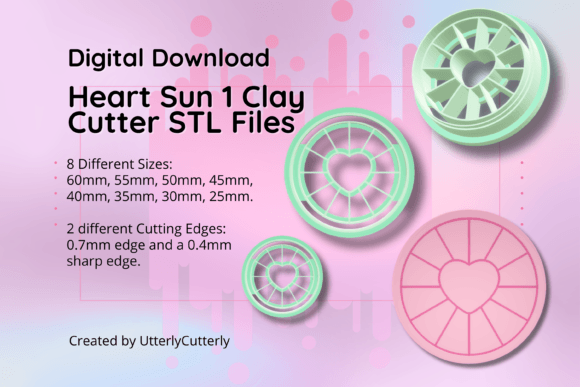
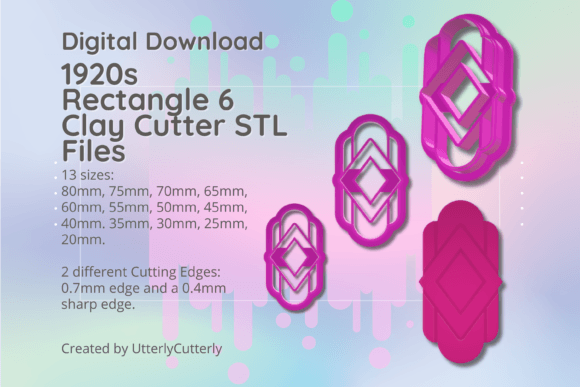
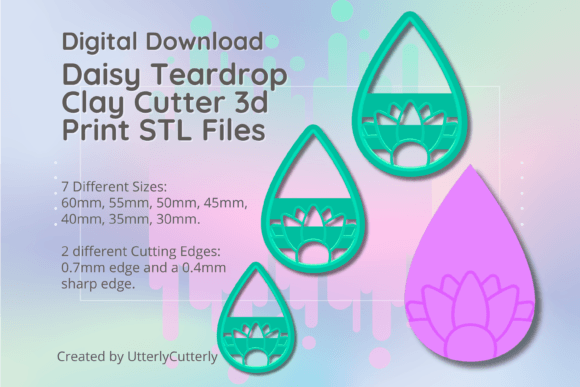
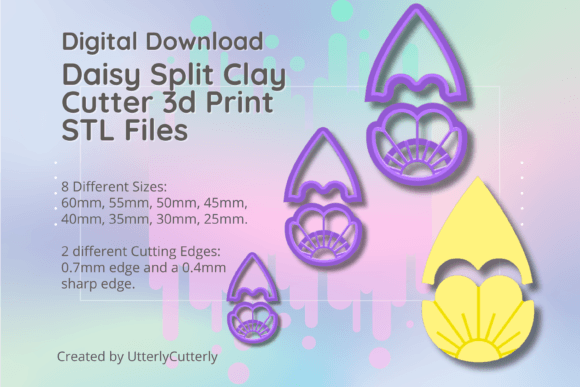
A critical factor in selecting a cutter STL is the blade geometry, as this directly influences the finish of the clay and the ease of release. This digital pack offers two distinct cutter types, each engineered for different material behaviors and aesthetic goals. Understanding the difference prevents frustration during the finishing stage.
The 0.7mm Wall Configuration
The standard variant features a 0.7mm wall thickness with a 3mm thick base and a 12mm height. This design prioritizes structural rigidity and longevity. The thicker wall reduces the likelihood of the cutter deforming when pressed into stiff clay or dense dough. It is generally the safer choice for beginners or for use with materials that have high resistance. The tradeoff is that the cut edge may require slightly more cleanup or smoothing after demolding, as the 0.7mm surface area creates a broader contact point with the material.
The Sharp Edge (SE) Configuration
Abbreviated as SE in the file naming convention, this variant utilizes a 1mm support wall tapering to a 0.4mm cutting edge. Despite having a thinner functional edge, the 1mm support wall maintains necessary stiffness while allowing for cleaner shearing through soft media. This profile is ideal for detailed jewelry components or delicate cookies where minimizing post-cut manipulation is vital. Users should note that while the SE version produces superior results on soft clay, it may be more susceptible to damage if used with overly hard materials or excessive force. Evaluating your primary medium is necessary before choosing which file set to print.
Size Versatility and Modular Workflow Integration
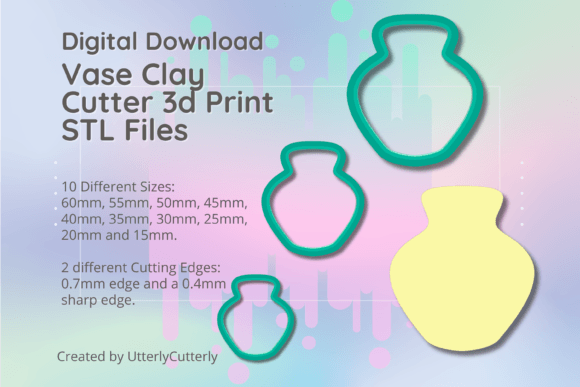
The utility of a Vase Clay Cutter STL digital file extends beyond individual cuts; it lies in the ability to curate custom combinations. With sizes spanning 15mm, 20mm, 25mm, 30mm, 35mm, 40mm, 45mm, 50mm, 55mm, and 60mm, this bundle supports both micro-jewelry applications and larger decorative elements. Measurement is taken from the longest ends of the cutter, ensuring consistent sizing logic across the entire range.
This modularity contrasts sharply with static toolsets. For example, a ceramicist creating a nested vase sculpture can print exact intermediate sizes that commercial sets do not offer. Similarly, a cookie decorator can scale designs to fit specific packaging constraints without waiting for custom manufacturing. The weekly addition of new STL files to the store ecosystem further enhances this flexibility, allowing users to expand their library incrementally. However, this open-ended nature requires disciplined file management. Unlike a physical drawer of tools, digital libraries demand organized storage and clear labeling to prevent printing errors, such as confusing the SE and standard versions.
Practical Application Scenarios
- Jewelry Making: The 15mm–30mm range in SE configuration is optimal for polymer clay earrings and pendants, providing clean edges that reduce sanding time.
- Ceramic Production: The 40mm–60mm range with the 0.7mm wall offers the durability needed for groggy clay bodies and repeated studio use.
- Baking and Confectionery: Both edge types are food-safe when printed in appropriate PLA/PETG, though the SE version yields sharper cookie definitions for intricate icing work.
- Prototyping: Digital files allow for rapid iteration; if a 45mm cutter feels too large, a 40mm version can be printed immediately for comparison.
Technical Considerations and Quality Assurance
While the convenience of digital downloads is significant, successful implementation depends heavily on print settings and machine calibration. All cutters in this collection undergo testing as part of a standard quality checking system before release, ensuring the geometry is sound. However, the final output quality is contingent upon the user’s hardware. Buyers must understand that this is not a physical item; access is granted immediately after payment, but functionality is not guaranteed without proper slicer configuration.
Users may need to amend their own settings depending on nozzle diameter, layer height, and material shrinkage. For instance, printing the 0.4mm SE edge typically requires a 0.4mm nozzle and careful flow rate calibration to avoid under-extrusion or fragile layers. Conversely, the 0.7mm wall is more forgiving but still benefits from optimized wall line counts to ensure the 3mm base remains flat and true. Comparing this to buying a metal cutter, the digital option shifts the quality assurance burden partially onto the maker. Those unwilling to troubleshoot print parameters may find the learning curve steep compared to off-the-shelf alternatives.
Evaluating Fit: When to Choose Digital Over Physical
Deciding whether to acquire a Vase Clay Cutter STL digital file involves weighing autonomy against convenience. This digital bundle is the right choice for makers who value specificity, possess 3D printing infrastructure, and desire a scalable tool library that evolves with their craft. The inclusion of dual edge profiles and ten incremental sizes addresses niche needs that generalist suppliers cannot meet efficiently. Furthermore, the cost-per-unit decreases significantly over time as the initial investment in the printer is amortized across hundreds of custom tools.
Conversely, this format may not suit hobbyists who produce infrequently or professionals who require certified food-grade stainless steel for commercial kitchen compliance. 3D printed plastics, while excellent for prototyping and small-batch artisan work, have temperature and sanitation limitations distinct from industrial metal tooling. Additionally, if immediate tactile feedback is required for client approval, the delay inherent in printing and post-processing digital files could be a bottleneck.
Ultimately, the value of this STL bundle lies in its role as a production enabler rather than a simple replacement for traditional cutters. By offering tested geometries in versatile configurations, it bridges the gap between digital design and physical craftsmanship. Makers who approach these files as customizable components within a broader fabrication ecosystem will derive the most benefit, leveraging the 0.7mm and SE options to optimize both efficiency and aesthetic outcomes across clay and culinary mediums.