Wide Trapezoid Clay Cutter - STL Digital: Optimizing Your 3D Printed Tools
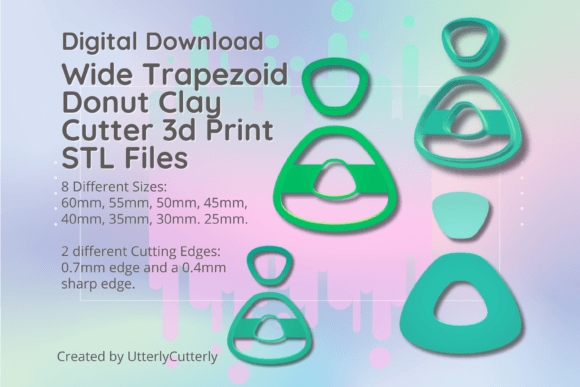
Creating consistent, professional-grade polymer clay jewelry or cookies requires more than just artistic skill; it demands precision tools that behave predictably. The Wide Trapezoid Clay Cutter - STL Digital bundle addresses this need by providing a versatile geometric foundation for makers. This digital download includes two distinct cutter profiles across eight graduated sizes, allowing creators to curate custom sets rather than relying on generic, ill-fitting options. However, owning the file is only the first step. Many makers encounter frustration not because the design is flawed, but because they overlook critical specifications regarding wall thickness, cutting edge selection, and clay volume displacement.
Understanding the technical nuances of this specific STL pack prevents wasted filament, ruined clay slabs, and inconsistent sizing. Whether you are producing earrings or baked goods, treating these digital files as precision instruments rather than simple outlines will significantly elevate your final output.
Selecting the Correct Cutting Edge Profile
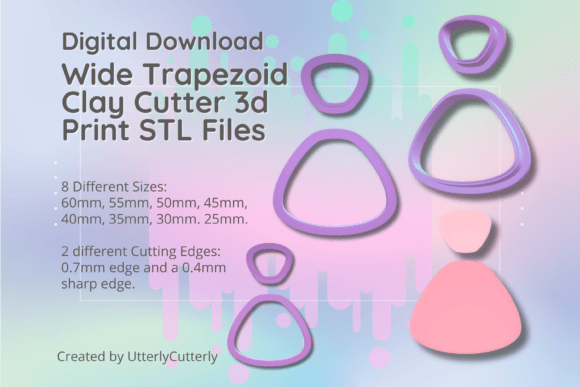
A common oversight when downloading cutter bundles is assuming all files serve the same purpose. This Wide Trapezoid Clay Cutter - STL Digital pack includes two distinct cutter types, and choosing the wrong one for your material is a frequent source of poor results.
- Standard Wall (0.7mm): This version features a 0.7mm wall with a 3mm thick base and 12mm height. It is robust and ideal for cookie dough or firmer clays where structural integrity during the pressing motion is paramount. Using this on delicate polymer clay can sometimes cause drag marks due to the thicker wall displacing more material.
- Sharp Edge (SE): Abbreviated as SE in the file names, this variant uses a 1mm support wall tapering to a precise 0.4mm cutting edge. It shares the same 3mm base and 12mm height but is engineered specifically for clean slicing through polymer clay without distortion.
If you attempt to use the Standard Wall cutter for detailed earring components, you may find the edges require excessive post-processing sanding. Conversely, using the Sharp Edge version on stiff cookie dough risks bending the thin cutting lip. Always verify the file suffix matches your current project material before sending the job to your printer.
Navigating Sizing and Measurement Standards
Sizing confusion leads to mismatched sets and production delays. A practical mistake many beginners make is assuming cutter size refers to the visual width of the shape at its widest point or the center. For this Wide Trapezoid Clay Cutter - STL Digital collection, size is strictly measured from the longest ends.
The bundle provides eight sizes designed to nest or coordinate visually:
- 60mm
- 55mm
- 50mm
- 45mm
- 40mm
- 35mm
- 30mm
- 25mm
When planning an earring set, remember that the finished clay piece will be slightly smaller than the cutter’s stated dimension due to the inward angle of the cutting wall and natural clay retraction. If your design requires a precise 50mm finished component, utilizing the 55mm cutter might be necessary to account for trimming and sanding. Always print a single test size and measure the resulting clay blank against your calipers before committing to a full production run.
Critical Considerations for Embossing Lines
Some variations in this digital pack include embossing details to add texture directly during the cutting phase. A frequent error occurs when makers use clay sheets that are too thin for these integrated textures. The embossing lines in these files are 10.5mm tall relative to the base.
To function correctly without bottoming out or tearing the clay, you must condition your slab to be thicker than 1.5mm. If you roll your clay to a standard 1mm thickness, the embosser will hit the work surface before the texture fully transfers, resulting in a flat impression and potential damage to your printing bed or mat. Adjust your roller guides or pasta machine setting to ensure adequate depth for the relief features.
Printing Parameters for Functional Durability
Digital files are only as good as their physical execution. Even a perfectly modeled Wide Trapezoid Clay Cutter - STL Digital can fail if printed with inappropriate settings. The 3mm thick base and 12mm height are designed for ergonomics and rigidity, but they require sufficient infill and perimeter strength.
Avoid printing these cutters with low wall counts to save time. The lateral pressure applied during cutting can snap a cutter with only two perimeters. Aim for at least three to four walls (perimeters) and 15-20% infill. For the Sharp Edge (SE) variants, ensure your nozzle diameter and layer height allow for accurate reproduction of the 0.4mm tip. A 0.4mm nozzle is generally the maximum recommended size for the SE files; using a 0.6mm nozzle may fuse the cutting edge into a blunt ridge, rendering it ineffective for fine detail work.
Material Safety and Application Context
While these STL files are versatile, users must distinguish between food-safe and craft-only applications based on their printing setup. Just because a cutter shape works for cookies does not automatically make your specific printed object food-safe. Layer lines in FDM prints can harbor bacteria, and nozzle materials may contain lead or other contaminants.
If utilizing the Wide Trapezoid Clay Cutter - STL Digital for culinary purposes, adhere to strict food safety protocols: use certified food-safe filament, employ a stainless steel nozzle, and consider sealing the print with a food-grade epoxy. For polymer clay jewelry making, standard PLA or PETG is perfectly acceptable and often preferred for its ease of printing and smooth finish. Clearly labeling your storage containers prevents accidental cross-contamination between studio tools and kitchen equipment.
Maximizing Value Through Digital Organization
Since this is a digital download and not a physical item, immediate access allows for rapid iteration. However, disorganized file management leads to reprinting old versions or losing track of which sizes belong to which edge type. Upon purchase, create a dedicated folder structure separating "Standard" and "SE" files immediately.
Consider printing physical tokens or labels for each cutter size and type. Because the trapezoid shape can look similar at adjacent sizes (e.g., 40mm vs 45mm), visual identification while working at the bench is difficult. Embedding the size into the 3D print via text modification in your slicer, or painting the size number on the handle after printing, saves significant cognitive load during creative sessions.
This bundle is part of a growing ecosystem with new STL files added weekly. By mastering the specific tolerances and edge profiles of this Wide Trapezoid Clay Cutter - STL Digital pack now, you establish a reliable baseline. This ensures that future additions to your digital library integrate seamlessly with your existing workflow, maintaining consistency across your entire product line. Treat these digital assets with the same respect as traditional metal tools, and they will provide years of precise, creative service.