Evaluating the Simple Winter Scene Tile Clay Cutter STL
The Simple Winter Scene Tile Clay Cutter is a digital asset designed for makers who utilize 3D printing technology to create custom tools for polymer clay, ceramic clay, and cookie decorating. Unlike pre-manufactured metal or plastic cutters, this product exists as an STL file bundle that users download and fabricate on their own equipment. The collection focuses on versatile winter and Christmas themes, providing a standardized tile shape in multiple dimensions. For artisans and hobbyists evaluating whether to integrate digital cutter files into their workflow, understanding the specific technical parameters, material requirements, and practical applications of this Simple Winter Scene Tile Clay Cutter is essential for making an informed purchasing decision.
Understanding the Digital Format and Accessibility
It is critical to recognize that this product is strictly a digital download. No physical item will be shipped. Upon payment, buyers receive immediate access to the STL files required for 3D printing. This distinction fundamentally changes the value proposition compared to traditional craft supplies. The primary benefit is instant accessibility; there are no shipping delays or international customs fees. Makers can begin production within minutes of purchase, which is particularly advantageous for seasonal projects where timing is constrained by holiday deadlines.
However, this format introduces a dependency on hardware. Prospective buyers must possess a functioning FDM (Fused Deposition Modeling) or resin 3D printer and have basic proficiency with slicing software. If you do not own a printer or lack the technical confidence to manage print settings, layer adhesion, and bed leveling, a physical cutter remains the more practical choice. The digital route offers superior customization and cost-efficiency over time but requires an upfront investment in both equipment and skill acquisition.
Technical Specifications and Print Considerations
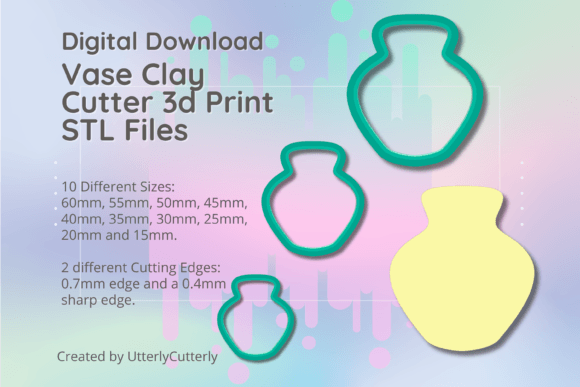
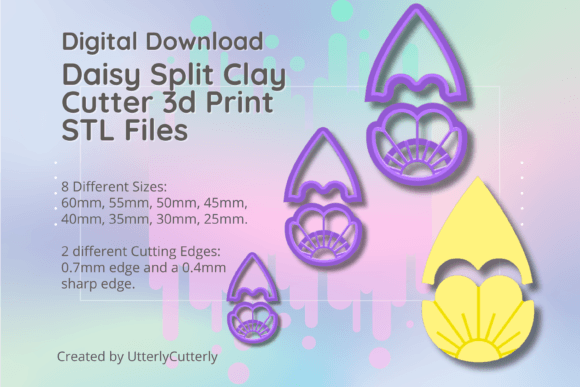
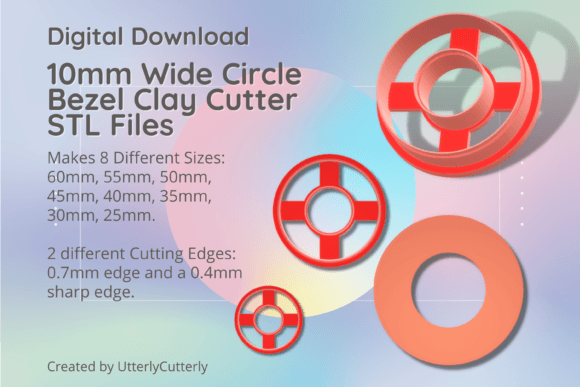
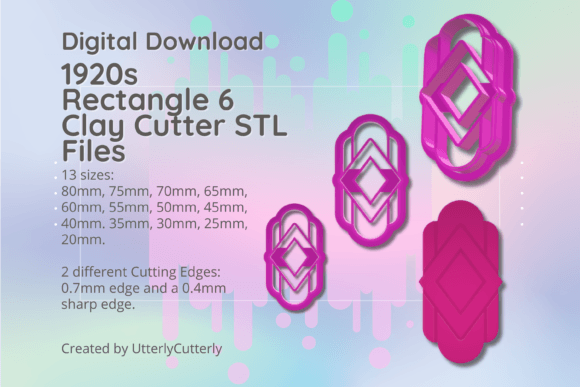
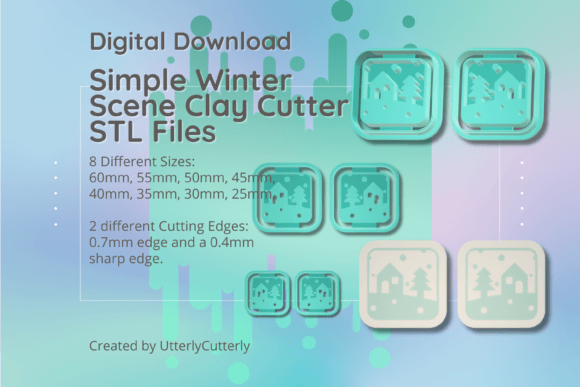
This STL bundle is engineered with specific tolerances to ensure functionality across different materials. The pack includes eight distinct sizes measured from the longest ends: 60mm, 55mm, 50mm, 45mm, 40mm, 35mm, 30mm, and 25mm. This graduated sizing allows creators to curate custom combinations for jewelry sets, ornament collections, or tiered cookie displays without needing to source separate products.
A key evaluation point for 3D printed cutters is the cutting edge geometry. This Simple Winter Scene Tile Clay Cutter offers two distinct profiles to accommodate different user preferences and material densities:
- Standard Edge: Features a 0.7mm wall thickness with a 3mm thick base and a total height of 12mm. This profile provides structural rigidity and durability, making it suitable for stiffer clays or repeated use. The thicker wall reduces the risk of the cutter deforming during the pressing motion.
- Sharp Edge (SE): Abbreviated as SE in the file names, this variant utilizes a 1mm support wall tapering to a precise 0.4mm cutting edge. It shares the same 3mm base and 12mm height specifications. The sharper edge yields cleaner cuts with less drag, which is preferable for soft polymer clays or detailed cookie doughs where edge definition is paramount.
Users should also note the embossing specifications. Any decorative lines within the tile design are set at a height of 10.5mm. Consequently, these cutters are optimized for clay sheets thicker than 1.5mm. Attempting to use them on thinner gauges may result in incomplete impressions or structural failure of the clay piece. Evaluating your typical working thickness against this specification prevents frustration and wasted material.
Versatility Across Mediums
The utility of this Simple Winter Scene Tile Clay Cutter extends beyond a single medium. While primarily marketed for clay work, the geometry is equally applicable to culinary uses. The food-safe nature of the cut depends entirely on the filament chosen by the maker; PLA is generally considered safe for brief contact with dough, whereas other filaments may not be. For ceramic artists, the sturdy base and defined edges facilitate consistent slab cutting, though users should account for clay shrinkage rates when selecting sizes for kiln-fired projects.
For jewelry makers, the smaller sizes (25mm–40mm) provide ideal dimensions for pendants and earrings. The larger sizes (45mm–60mm) serve better as statement pieces, ornaments, or decorative tiles. Having the entire size range in one digital bundle eliminates the need to mix and match incompatible designs from different sources, ensuring visual consistency across a product line.
Comparative Analysis: Digital vs. Physical Cutters
When deciding between this STL bundle and commercial alternatives, several tradeoffs warrant consideration. Physical brass or stainless steel cutters offer superior longevity and heat resistance. They can be cleaned aggressively and do not degrade with use. In contrast, 3D printed plastic cutters have a finite lifespan. Layer lines may eventually harbor residue, and the plastic can warp if exposed to high temperatures or excessive force.
Conversely, the digital Simple Winter Scene Tile Clay Cutter offers economic scalability. Once the initial file cost is covered, producing additional cutters costs only pennies in filament and electricity. If a cutter breaks or wears out, it can be reprinted immediately. Furthermore, digital files allow for iterative testing; a maker can print the Sharp Edge version for delicate work and the Standard version for heavy-duty tasks without purchasing two separate physical products. New STL files are added to the store weekly, suggesting an expanding ecosystem of compatible designs that physical manufacturers cannot match in terms of release velocity.
Determining Fit for Your Workflow
This digital cutter bundle represents a strong fit for makers who prioritize design cohesion, rapid prototyping, and low marginal costs. It is particularly valuable for small business owners preparing for the winter season who need reliable, uniform tools without significant inventory investment. The inclusion of dual edge types demonstrates thoughtful engineering that addresses common pain points in 3D printed tool fabrication.
However, alternatives may be worth considering for those who require industrial-grade durability, lack 3D printing infrastructure, or work exclusively with very thin clay sheets under 1.5mm. Additionally, makers uncomfortable with troubleshooting print failures or managing digital assets may find the learning curve outweighs the benefits. Ultimately, the Simple Winter Scene Tile Clay Cutter serves as a functional bridge between digital design and tactile craftsmanship, offering flexibility that static manufacturing cannot provide, provided the user has the technical means to realize the files.