Flower 25 Clay Cutter - Daisy STL Digital: Evaluation and Usage Guide
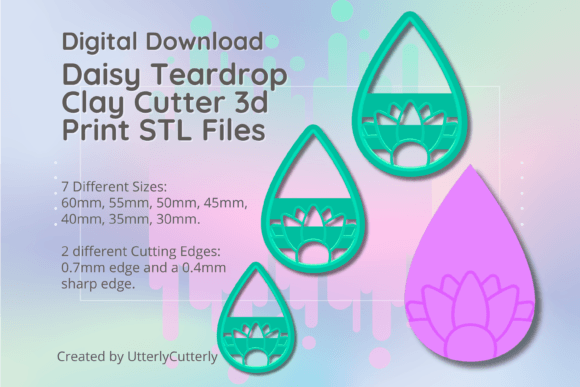
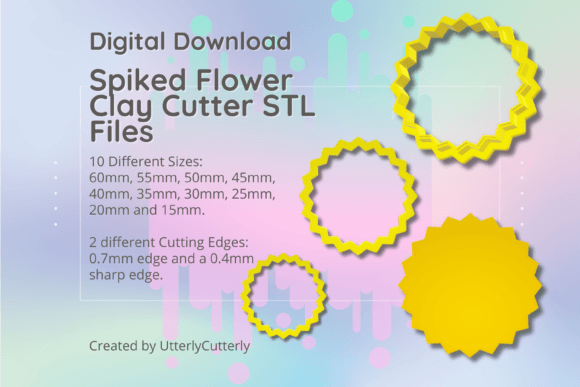
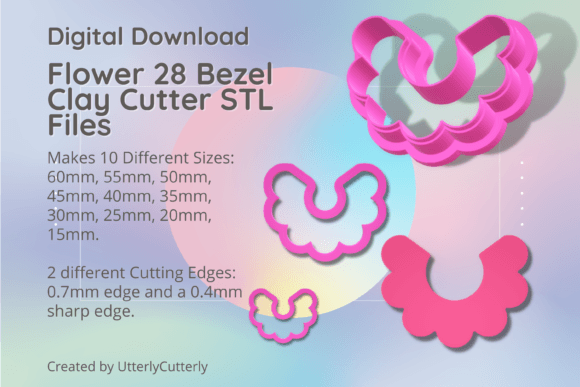
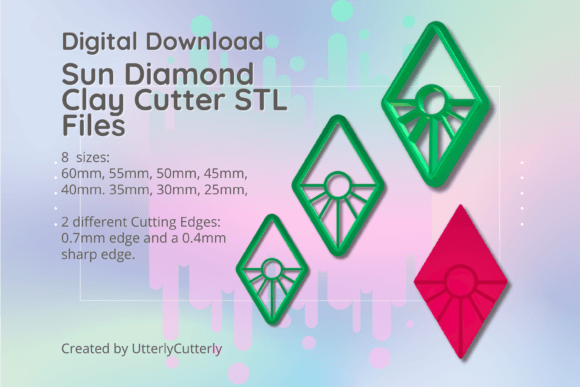
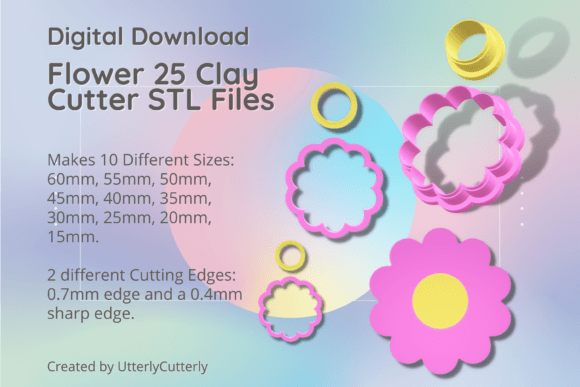
The Flower 25 Clay Cutter - Daisy STL Digital is a downloadable 3D printing file package designed for creators who manufacture custom tools for polymer clay, fondant, and cookie decorating. Unlike physical products shipped by mail, this digital asset provides immediate access to manufacturing files, allowing users to produce their own cutters on-demand. The bundle specifically focuses on daisy flower designs and includes ten distinct sizes ranging from 15mm to 60mm, along with two specialized cutting edge profiles. For makers evaluating whether to integrate this digital resource into their workflow, understanding the technical specifications, material requirements, and practical applications is essential for determining if it aligns with current production capabilities.
Technical Specifications and Print Profiles
A primary consideration when selecting digital cutter files is compatibility with specific 3D printers and intended end-uses. The Flower 25 Clay Cutter - Daisy STL Digital addresses varying needs through two distinct cutter types included in the download. Understanding the difference between these profiles is critical for achieving the desired finish on clay or dough.
- Standard Edge (0.7mm Wall): This profile features a 0.7mm wall thickness with a 3mm thick base and a total height of 12mm. It offers increased durability and rigidity, making it suitable for stiffer clays or repeated use without deformation.
- Sharp Edge (SE): Abbreviated as SE in the file names, this variant utilizes a 1mm support wall tapering to a 0.4mm cutting edge. Like the standard version, it has a 3mm base and 12mm height. The thinner edge provides cleaner cuts with less resistance but may require more careful handling during printing and use to prevent damage.
All sizes are measured from the longest ends of the design. The available dimensions include 60mm, 55mm, 50mm, 45mm, 40mm, 35mm, 30mm, 25mm, 20mm, and 15mm. This comprehensive size range allows creators to maintain design consistency across different projects, such as matching earring sets or tiered cake decorations, without needing to source multiple disparate files.
Evaluating Suitability for Creative Projects
Digital STL files offer distinct advantages over pre-manufactured plastic cutters, particularly regarding customization and inventory management. However, they also introduce variables related to print quality and post-processing. Makers should weigh these factors based on their specific creative goals.
Benefits of Digital Acquisition
The immediate availability of the Flower 25 Clay Cutter - Daisy STL Digital eliminates shipping wait times, which is beneficial for time-sensitive commissions. Furthermore, owning the master file allows for unlimited reproduction. If a cutter breaks or wears out after extensive use with abrasive materials like porcelain clay, a replacement can be printed instantly at a negligible material cost. The inclusion of ten sizes in a single bundle also facilitates scalable design work; a jeweler can create a cohesive collection featuring miniature 15mm daisies for studs and larger 40mm blooms for statement pendants using geometrically identical proportions.
Considerations and Tradeoffs
While versatile, digital files shift the burden of quality control to the user. Print orientation, layer height, and nozzle diameter significantly impact the final tool's performance. The Sharp Edge (SE) files, with their 0.4mm tip, demand precise printer calibration. Users with entry-level FDM printers may struggle to achieve a clean edge without tuning retraction settings or utilizing a smaller nozzle. Additionally, while the 12mm height accommodates most polymer clay thicknesses, embossing lines on the daisy design are set at 10.5mm. Consequently, these cutters function optimally only with clay sheets thicker than 1.5mm. Attempting to use them on thinner gauges may result in incomplete impressions or structural failure of the clay piece.
Practical Applications and Material Compatibility
The versatility of the daisy design makes this STL pack relevant across multiple disciplines, though performance varies by medium. Evaluating the intended application helps determine which cutter profile to utilize.
- Polymer Clay Jewelry: The Sharp Edge profile is generally preferred for earrings and pendants to minimize cleanup and sanding. The 0.4mm edge slices through conditioned polymer clay cleanly, preserving fine details.
- Cookies and Baking: Food safety is a paramount concern for 3D printed items due to layer lines harboring bacteria. While PLA is often considered food-safe in raw form, the printing process creates micro-crevices. These cutters are best used for fondant, gum paste, or marzipan rather than direct contact with wet dough, unless sealed with a certified food-safe epoxy coating.
- Hair Accessories: Barrettes and clips often require larger surface areas. The 50mm to 60mm sizes provide adequate coverage for adult hair accessories, while the Standard Edge profile offers the necessary rigidity to press through thicker air-dry clays often used in hair clip bases.
Decision-Making Framework for Buyers
Determining whether the Flower 25 Clay Cutter - Daisy STL Digital is the right investment requires an honest assessment of current resources and project requirements. This digital product is a strong fit for makers who already possess a reliable 3D printer and experience with slicing software. It is ideal for those who value design consistency across multiple scales and wish to reduce long-term overhead costs associated with purchasing individual physical cutters. The weekly release schedule of new STL files from this vendor also suggests potential for future catalog expansion, benefiting creators looking for a consistent supplier ecosystem.
Conversely, alternatives may be worth considering for beginners without 3D printing infrastructure or those requiring immediate, guaranteed food-safety compliance without additional sealing steps. Purchasing physical, injection-molded steel or brass cutters remains superior for high-volume commercial baking where durability and hygiene certification are non-negotiable. Similarly, if a creator only requires a single size for a one-off project, the time and material investment of setting up a print may outweigh the cost of buying a single physical cutter.
Optimizing Print Settings for Best Results
To maximize the utility of this digital download, users should adjust slicer settings according to the chosen cutter type. For the Standard 0.7mm wall, a minimum of three perimeters is recommended to ensure the wall forms correctly. For the Sharp Edge (SE) files, enabling ironing on the top surface can help smooth the cutting face, reducing friction against clay. Because the base is 3mm thick, ensuring adequate bed adhesion is crucial to prevent warping that could distort the daisy shape. Users should also verify that their printer’s Z-offset is calibrated precisely; even minor deviations can cause the delicate 0.4mm edge to fail on the first layer. By treating the digital file as a component of a broader manufacturing process rather than a standalone solution, creators can effectively leverage the Flower 25 Clay Cutter - Daisy STL Digital to enhance their product offerings efficiently.